


Gadchiroli pitched as Maharashtra’s future green steel hub India set to drive next global steel demand wave Italy crude steel output rises 3.1% in May Green steel progress remains slow worldwide
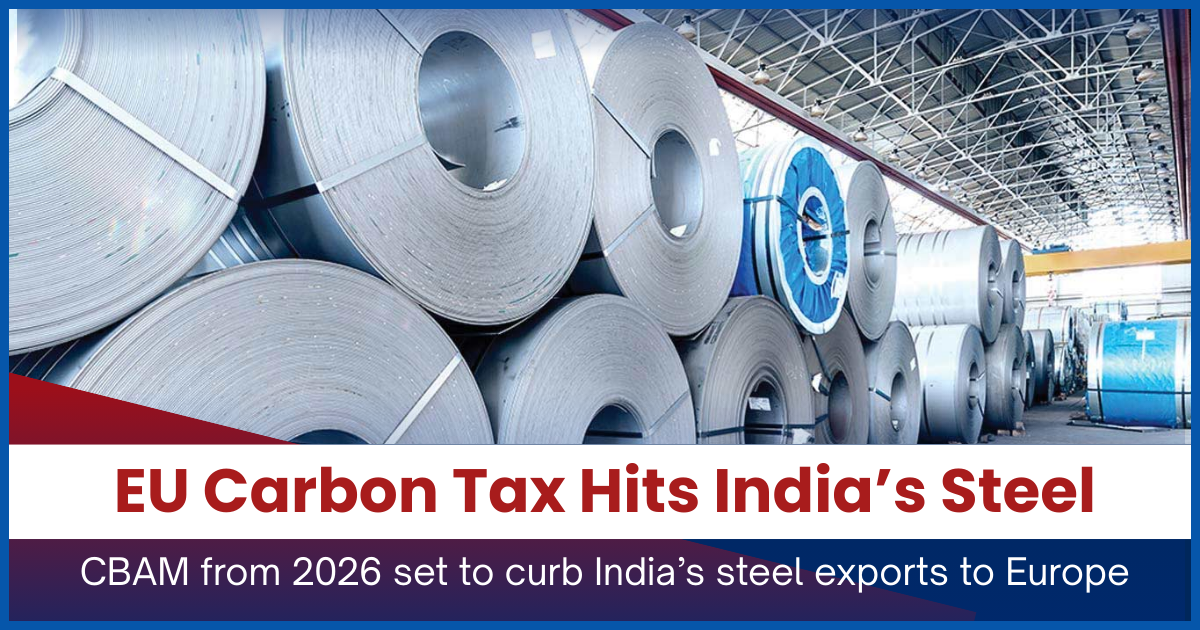
India’s steel exports to Europe are expected to decline once the European Union’s Carbon Border Adjustment Mechanism (CBAM) – effectively a carbon tax on imports – takes effect from January 1, 2026.
Currently, roughly two-thirds of India’s steel exports are shipped to Europe. The new levy will raise the landed cost of Indian steel, especially material produced via the blast furnace–basic oxygen furnace route, which has higher carbon emissions. This is likely to erode margins and competitiveness for Indian mills in the EU market.
Industry executives and analysts say steelmakers are now exploring alternative markets in Africa and the Middle East, while also counting on strong domestic demand driven by infrastructure spending to absorb more volumes at home. At the same time, producers face pressure to accelerate decarbonisation plans, including greater use of electric arc furnaces and low-carbon technologies.
There is still uncertainty among companies over how CBAM liabilities will be calculated and whether rates will differ by producer, adding to planning challenges. In the near term, the mechanism is expected to slow India’s steel exports to the EU, even as policymakers continue diplomatic efforts to seek relief and push for global climate measures that are more equitable for developing economies.
Also Read : Vardhman Group to Set Up ₹2,500 Cr Greenfield Steel Plant in Ludhiana EEPC India Urges Inclusion of Steel and Aluminium in US Trade Deal
The Department of Commerce and the Ministry of Steel continue to be in disagreement over how much lo...
Ferrous 04-Jun-2024
India and Oman are on the brink of finalising a trade deal that would facilitate smoother access to...
Business 27-Feb-2024
China’s steel industry is witnessing a major structural shift as weakening steel production co...
China 26-May-2026
According to the mines secretary V L Kantha Rao, the government will put on sale around 20 critical...
Raw Material 29-Apr-2024
Jindal Stainless has signed an agreement under the government’s PLI 1.2 scheme for speci...
Business 12-Feb-2026
On May 16, nearly all metal stocks traded in the green extending gains for the fifth session in a ro...
Business 16-May-2024