


Gadchiroli pitched as Maharashtra’s future green steel hub India set to drive next global steel demand wave Italy crude steel output rises 3.1% in May Green steel progress remains slow worldwide
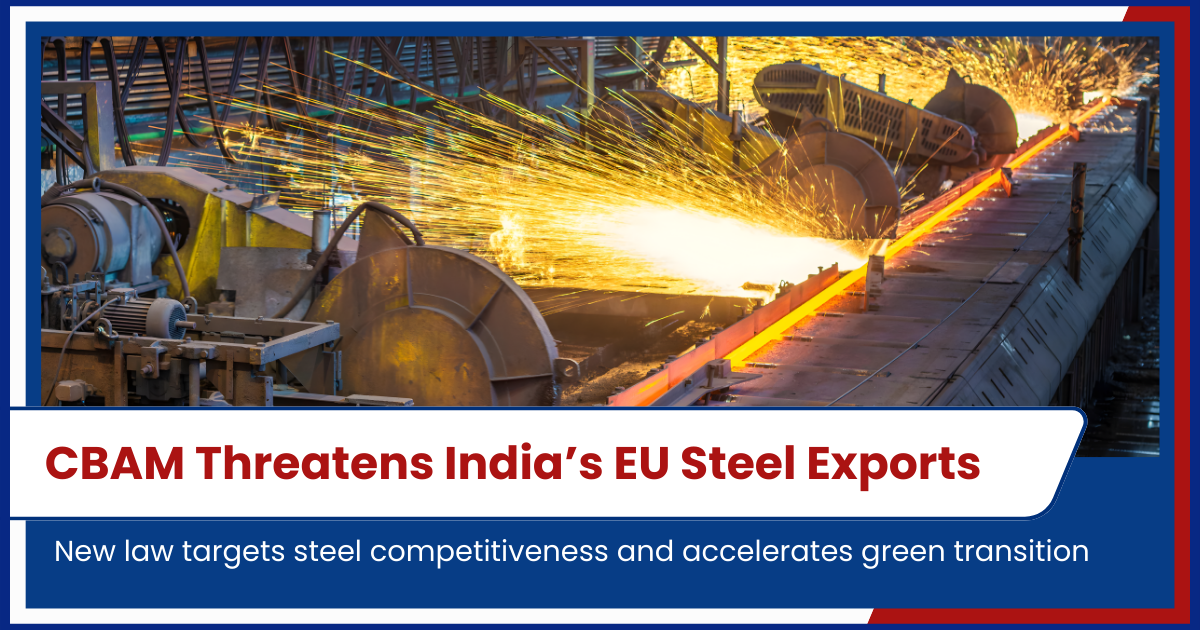
Indian steel exports to the European Union are expected to decline significantly once the bloc’s Carbon Border Adjustment Mechanism (CBAM) becomes fully operational on 1 January 2026. The new regime will impose a carbon-based levy on imported steel, cement, electricity, fertilisers and other carbon-intensive goods, effectively raising the landed cost of higher-emission products.
Europe is currently the key destination for Indian steel, accounting for roughly two-thirds of India’s total steel exports. Most Indian mills, however, rely on the blast furnace–basic oxygen furnace route, which carries a much higher carbon footprint than electric arc furnace production. As a result, their products are likely to face steeper CBAM charges and lose price competitiveness in the EU market.
Industry representatives say producers have already begun reorienting exports toward alternative markets, particularly in Africa and the Middle East, even as they prepare for a longer-term transition to lower-carbon technologies. Former steel secretary Aruna Sharma noted that companies acknowledge the need for cleaner production but still lack clarity on how CBAM liabilities will be calculated and whether they will vary by producer.
Analysts warn that without accelerated investment in green steel pathways, India risks losing share in one of its most important export markets once the EU carbon border tax is in place.
Also Read : India’s Small Steelmakers Cut Output as Weak Demand, Falling Prices Bite BMW Invests ₹803 Crore to Expand High-End Steel Production in Bokaro
Tit For Tat - India Set To Impose Tariffs On U.S. India is preparing to impose retaliatory tar...
US 11-Aug-2025
An official announced that Kalyani Steel Limited has proposed to invest ₹26,000 crore to establish a...
Mid Corporate 13-Feb-2024
JSW Steel mentioned that its subsidiary JSW Steel USA aiming to invest $110 million to modernise its...
Large Corporate 25-Jun-2024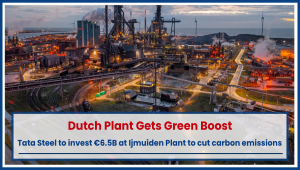
Tata Steel Nederland has signed a letter of intent with the Dutch government for an investment of up...
Construction 30-Sep-2025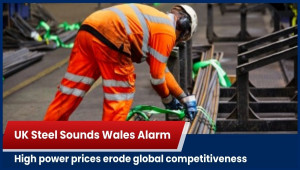
The Welsh steel sector is under renewed strain as industry leaders warn that soaring energy co...
Europe 02-Mar-2026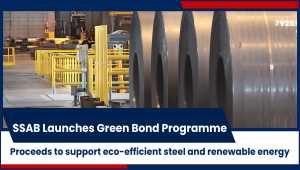
Swedish steelmaker SSAB has issued its first-ever green bonds, raising SEK 2,800 million to support...
Construction 14-Nov-2025