


Gadchiroli pitched as Maharashtra’s future green steel hub India set to drive next global steel demand wave Italy crude steel output rises 3.1% in May Green steel progress remains slow worldwide
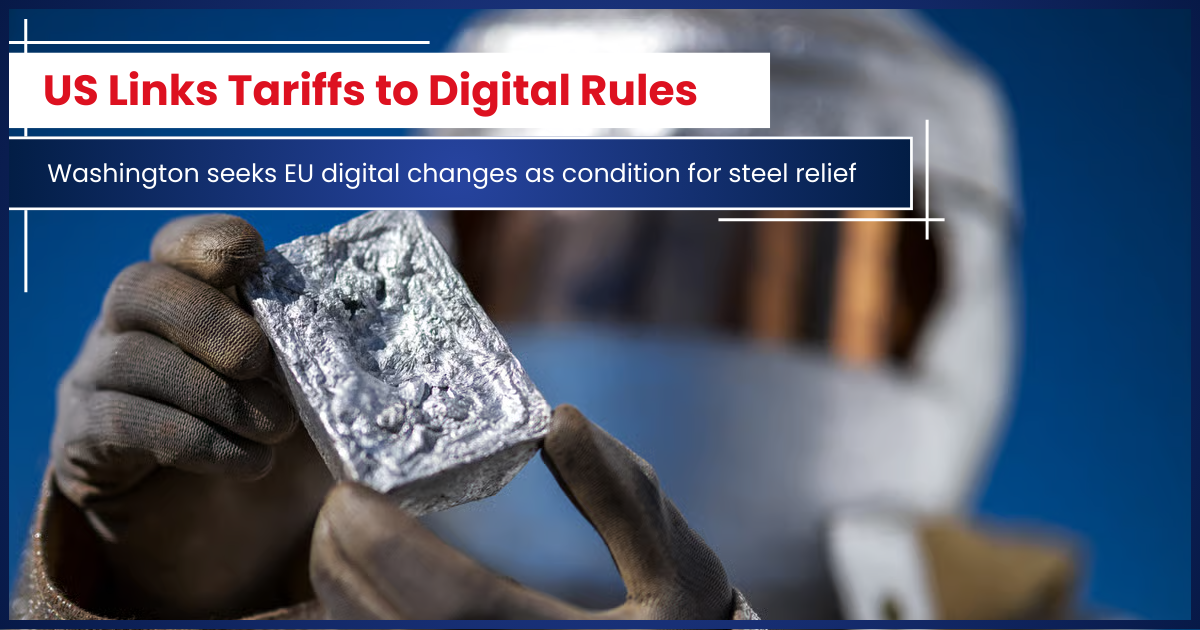
The United States has signalled that it will press the European Union to adopt more “balanced” digital-sector regulations as a precondition for easing steep tariffs on European steel and aluminium. The push was reinforced during talks in Brussels on November 24, where US trade officials linked tariff relief to a review of the EU’s digital rulebook.
The broader July trade understanding envisioned a harmonised 15% customs duty for many goods and the removal of duties on selected strategic items, while leaving other tariff lines — including a 50% US duty on specific European steel and aluminium products — subject to further negotiation. US representatives argued that softer, investment-friendly digital rules in the EU would attract substantial US technology capital and help unlock major investment flows, which some officials estimated could reach as high as $1 trillion.
Brussels, however, has defended its recent measures aimed at strengthening origin checks and raising duties to prevent circumvention, noting these actions are consistent with its trade-defence obligations. EU officials also emphasised the need to safeguard regulatory objectives in areas such as data protection, competition and platform oversight.
Trade analysts caution that coupling tariff normalization with digital-regulatory alignment broadens the negotiation agenda and could complicate progress. Tying sector-specific regulatory reform to tariff outcomes raises political and technical hurdles for both sides, suggesting that a comprehensive agreement will require intensive, cross-sectoral talks before any large-scale tariff rollbacks are feasible.
Also Read : Record US renewable energy investment falls short of climate goals US–Japan Trade Deal Resets Tariffs, Keeps Steel Duties at 50%
ArcelorMittal Nippon Steel India has become the first company to receive Strategic Investment...
Business 30-May-2026
Microsoft mentioned that a Russian state-sponsored group hacked into its corporate systems on Januar...
USA 20-Jan-2024
Steel ramps up Kalinganagar plant capacity from 3 MTPA to 8 MTPA Expansion includes new cold ro...
Business 27-May-2025
Aluminium prices on Friday declined ₹1.05 to ₹201.45 per kilogram in the futures market as participa...
Non-Ferrous 02-Feb-2024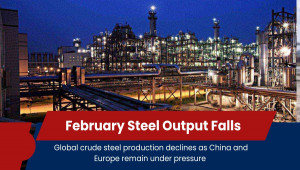
Global crude steel production softened in February 2026, showing that the recovery in steel de...
Europe 24-Mar-2026
Global steel production started 2025 on a slower note, with economic challenges and trade policies i...
Business 27-Feb-2025