


Gadchiroli pitched as Maharashtra’s future green steel hub India set to drive next global steel demand wave Italy crude steel output rises 3.1% in May Green steel progress remains slow worldwide

The government's fiscal deficit reached 63.6% of the annual target by January end, standing at ₹11 lakh cr, according to official data. This figure is slightly lower compared to the same period last year, where the deficit was 67.8% of the revised estimates. The estimated fiscal deficit for 2023-24 is ₹17.35 lakh cr, which is 5.8% of the GDP.
Total receipts amounted to ₹22.52 lakh cr, comprising ₹18.8 lakh cr from tax revenue (net), ₹3.38 lakh cr from non-tax revenue, and ₹34,219 cr from non-debt capital receipts. The total expenditure incurred was ₹33.54 lakh cr, with ₹26.33 lakh cr on revenue account and ₹7.2 lakh cr on capital account.
The government transferred ₹8,20,250 cr to state governments as their share of taxes, an increase of ₹1,52,480 cr from the previous year. Out of the total revenue expenditure, ₹8,21,731 cr was on interest payments and ₹3,15,559 cr on major subsidies.
Chief Economist at ICRA, Aditi Nayar, stated that while there might be some slippage in the disinvestment target and capital expenditure may lag, ICRA does not expect the revised fiscal deficit target of ₹17.3 lakh cr for FY2024 to be exceeded.
In the interim Budget, the government refrained from announcing populist measures, aiming to reduce the fiscal deficit to 5.1% of the GDP next fiscal year and 4.5% in FY26. The nominal GDP growth for the next financial year has been projected at 10.5%, with the nominal GDP estimated at ₹3,27,71,808 cr, assuming 10.5% growth over the estimated nominal GDP of ₹2,96,57,745 cr for FY2023-24.
Thanks to an improvement in tax buoyancy, the government managed to achieve a fiscal deficit of 5.8% against the budget estimate of 5.9% for the current financial year.
Also Read : Steel Minister Kumaraswamy Champions Sustainable Growth at Salem Steel Plant Delhi : ATF prices cut by ₹1,221/kl ahead of Budget 2024
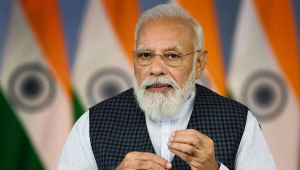
Prime Minister Narendra Modi dedicated and laid the foundation stone for over ₹56,000 crores in powe...
Renewables 05-Mar-2024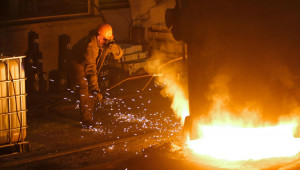
UK passes emergency law to take control of its last major steel factory. The move is aimed at prote...
Business 14-Apr-2025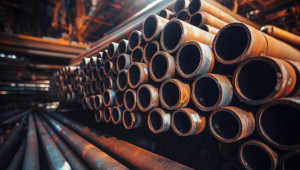
Turkey's steel industry has recently experienced significant growth, with exports increasing by 27.6...
Business 04-Mar-2025
After escalating concerns over China's economic challenges, investment banks are gearing up for furt...
China 09-Feb-2024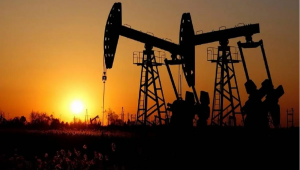
Oil prices fell due to concerns about the demand outlook following reports of higher producer prices...
US 19-Feb-2024
The European Union's Carbon Border Adjustment Mechanism (CBAM) is poised to significantly impact Ind...
Business 07-Aug-2024