


Gadchiroli pitched as Maharashtra’s future green steel hub India set to drive next global steel demand wave Italy crude steel output rises 3.1% in May Green steel progress remains slow worldwide
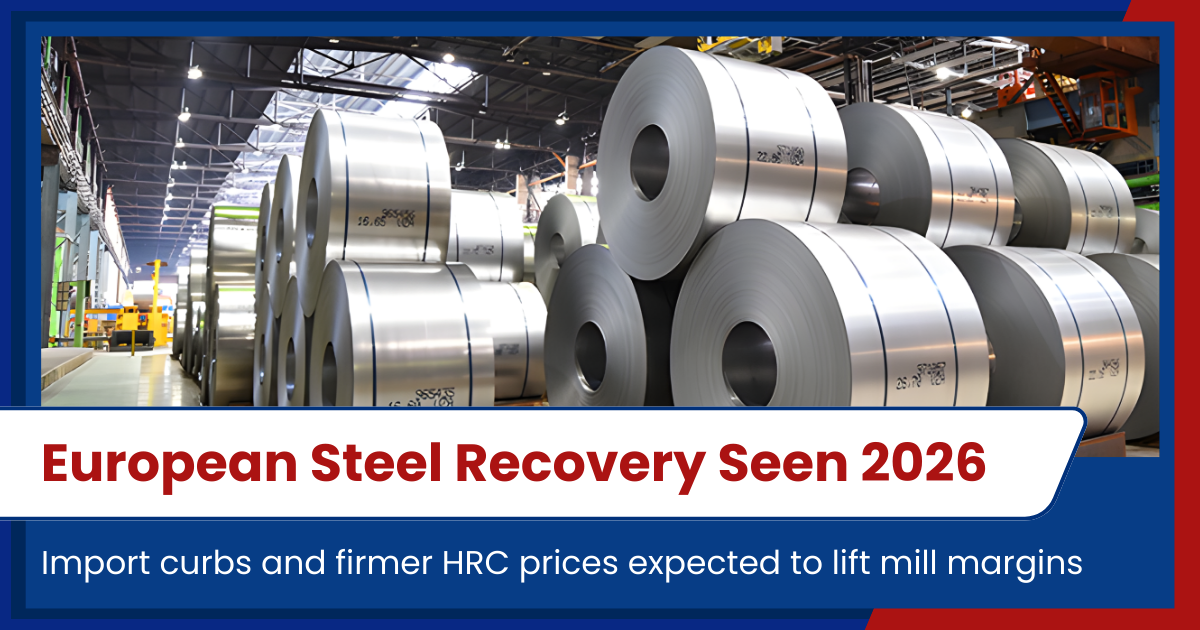
Europe’s steel sector, which has struggled through weak demand, high energy costs and a surge of low-priced imports, is expected to move into a more stable phase by 2026. According to analysts, a combination of proposed EU trade measures and gradual price improvement is likely to lift utilisation rates and support earnings across major European steelmakers.
The European Commission is considering a significant tightening of safeguards, including halving import quotas for several steel categories and doubling tariffs on out-of-quota shipments. These steps are aimed at curbing the influx of competitively priced steel from regions such as Asia and the CIS, which has kept domestic mills under pressure. If implemented, the measures could lift mill operating rates from the current subdued levels to 80–85% in 2026.
Pricing momentum is also expected to improve. Benchmark hot-rolled coil (HRC) prices, which remained depressed for most of 2025, are now forecast to rise toward $750 per tonne next year as supply tightens and demand stabilises across automotive, construction and machinery sectors.
While the recovery is expected to be gradual rather than sharp, analysts say the combination of stricter import controls and firmer pricing will provide a more favourable environment for European steelmakers after two challenging years.
Also Read : EU Steel Imports Rise 14% in 2025: EUROFER Europe needs €406 bn annually for climate goals by 2030
Vikram Solar, a supplier of solar energy solutions, declared that it received a contract to supply 3...
Renewables 18-Jun-2024
The United States has signalled that it will press the European Union to adopt more “balanced&...
US 26-Nov-2025
Ilsenburger Grobblech, a subsidiary of the Salzgitter Group, has officially inaugurated its new Trai...
Europe 03-Jun-2026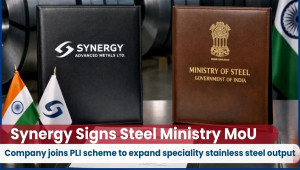
Synergy Advanced Metals has signed an MoU with India’s Ministry of Steel to participate...
India 23-Feb-2026
India is considering granting incentives to encourage private companies to establish lithium process...
Ferrous 10-May-2024
✅ BMW Industries expands steel manufacturing in Jharkhand to boost production.✅ Investment to supp...
Business 21-Mar-2025