


Gadchiroli pitched as Maharashtra’s future green steel hub India set to drive next global steel demand wave Italy crude steel output rises 3.1% in May Green steel progress remains slow worldwide
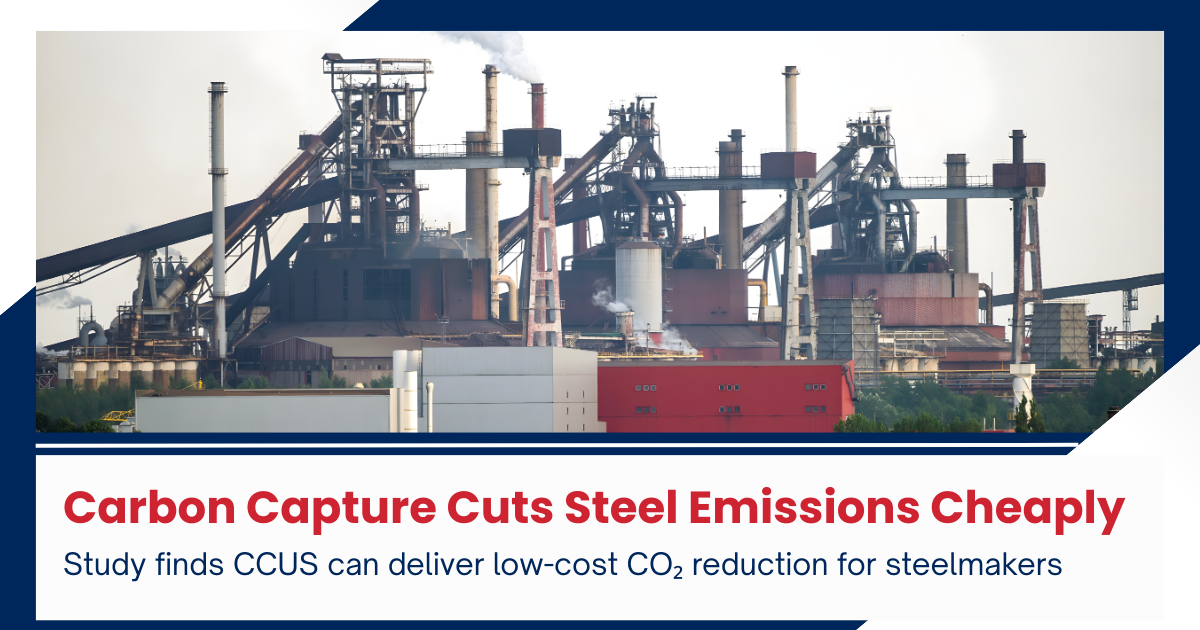
Carbon capture and storage technologies could offer one of the lowest-cost pathways to cutting emissions from the steel sector, according to a new study cited by industry and policy experts. The research, focused on hard-to-abate industries, finds that integrating carbon capture, utilisation and storage (CCUS) into existing steel plants can deliver substantial CO₂ reductions at a competitive cost per tonne, especially when combined with energy-efficiency upgrades and higher scrap usage.
Unlike full greenfield transitions to hydrogen-based steelmaking, CCUS can often be retrofitted onto current blast furnace–basic oxygen furnace (BF–BOF) infrastructure, avoiding premature asset stranding and large upfront capital write-offs. The study suggests that, with targeted investments and shared CO₂ transport and storage infrastructure, steelmakers could significantly curb emissions while maintaining output and international competitiveness.
The findings come as several countries, including India, prepare national CCUS missions and industrial decarbonisation strategies that prioritise steel and cement. Policymakers see CCUS as a complementary option alongside increased scrap recycling, process efficiency and emerging green hydrogen projects. Analysts note that clear regulatory frameworks, carbon pricing signals and supportive finance will be essential to scale carbon capture in steel and unlock the low abatement costs highlighted by the study.
Also Read : BSL inks pact with DRDO to manufacture DMR 249A military-grade steel Steelmakers urge tighter curbs on rising imports
Suryadev Alloys and Power, an integrated steel and power company, has introduced a new line of anti-...
Mid Corporate 13-May-2024
Steel Authority of India opened a new tab and reported a nearly 3% drop in fourth-quarter profit on...
Mid Corporate 21-May-2024
Iron ore prices have taken a hit as China’s steel mills cut production ahead of a crucial poli...
Raw Material 03-Mar-2025
NTPC's subsidiary NGEL signed an agreement with the Andhra Pradesh government to build an integrated...
Renewables 21-Feb-2024
By year's end, twenty coal mines likely to be functional, as per the official data. Given that the c...
Ferrous 10-Apr-2024
Tata Power Delhi Distribution Ltd (Tata Power-DDL) has entered into an agreement with the Administra...
Large Corporate 01-Feb-2024