


Gadchiroli pitched as Maharashtra’s future green steel hub India set to drive next global steel demand wave Italy crude steel output rises 3.1% in May Green steel progress remains slow worldwide
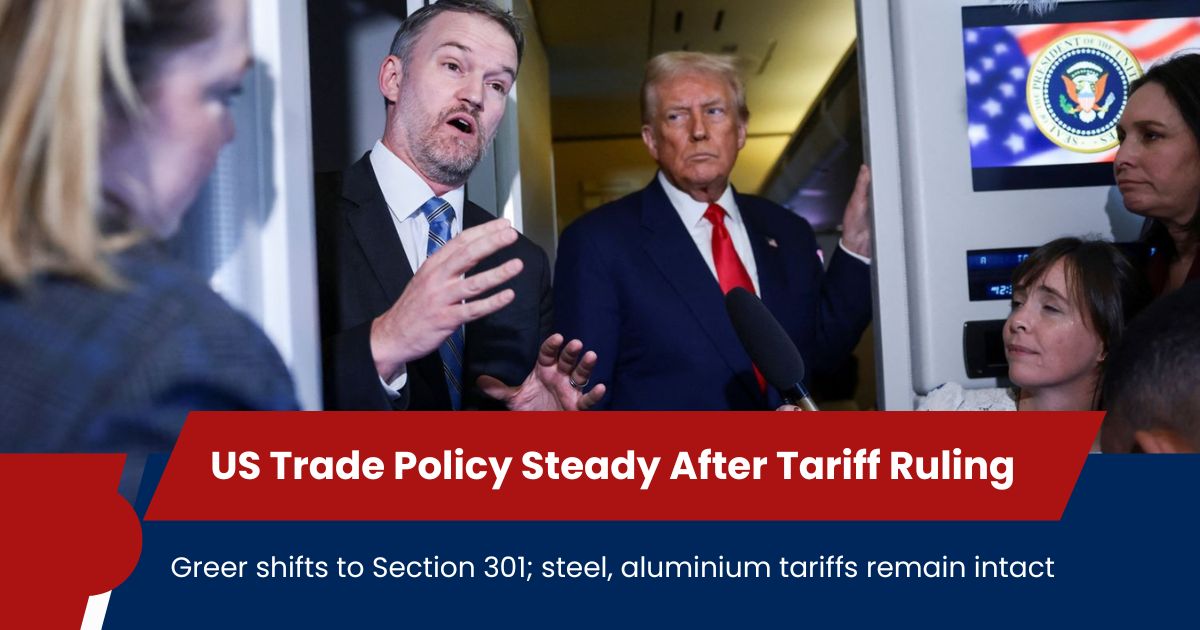
The US steel and metals trade is bracing for a legal pivot after the US Supreme Court curtailed the White House’s ability to levy broad tariffs under emergency economic powers. US Trade Representative Jamieson Greer said the administration’s trade agenda will continue, even if the “tools” change.
Greer indicated the USTR will lean more heavily on Section 301 investigations into alleged unfair trade practices—opening the door to targeted retaliatory duties where negotiations don’t deliver. He also stressed that existing national-security tariffs under Section 232, including measures covering steel and aluminium, remain in force.
To bridge the gap after the ruling, the administration has also moved to a temporary 10% global import tariff using Section 122 of the Trade Act of 1974, aimed at maintaining leverage while longer investigations run.For steel buyers and traders, the message is continuity with a different rulebook: compliance pathways, product classifications, and country exposure could matter as much as headline tariff rates, with fresh volatility possible around probe timelines and exemptions.
Also Read : US Steel Deal Seen Closing by Merger Deadline After Trump Pivot U.S. Steel to Restart Granite City Blast Furnace in 2026

China, a global leader in steel production, is facing significant challenges within its domestic ste...
Ferrous 02-Aug-2024
The International Energy Agency predicted that the US economy would grow above expectations and that...
Energy 15-Mar-2024
Bharat Dynamics Ltd., a state-run defence equipment manufacturer, has reduced its revenue projection...
Defence 22-Feb-2024
In a meaningful step toward sustainability and employee welfare, Adani Krishnapatnam Port has...
Business 03-Feb-2026
Jindal Steel has emerged as the preferred bidder for the Rengalaberha North-East Extension and Nuaga...
Business 12-Mar-2026
Turkey and the European Union have stepped up talks on the implementation of the Carbon Border...
Europe 25-Mar-2026