


Gadchiroli pitched as Maharashtra’s future green steel hub India set to drive next global steel demand wave Italy crude steel output rises 3.1% in May Green steel progress remains slow worldwide
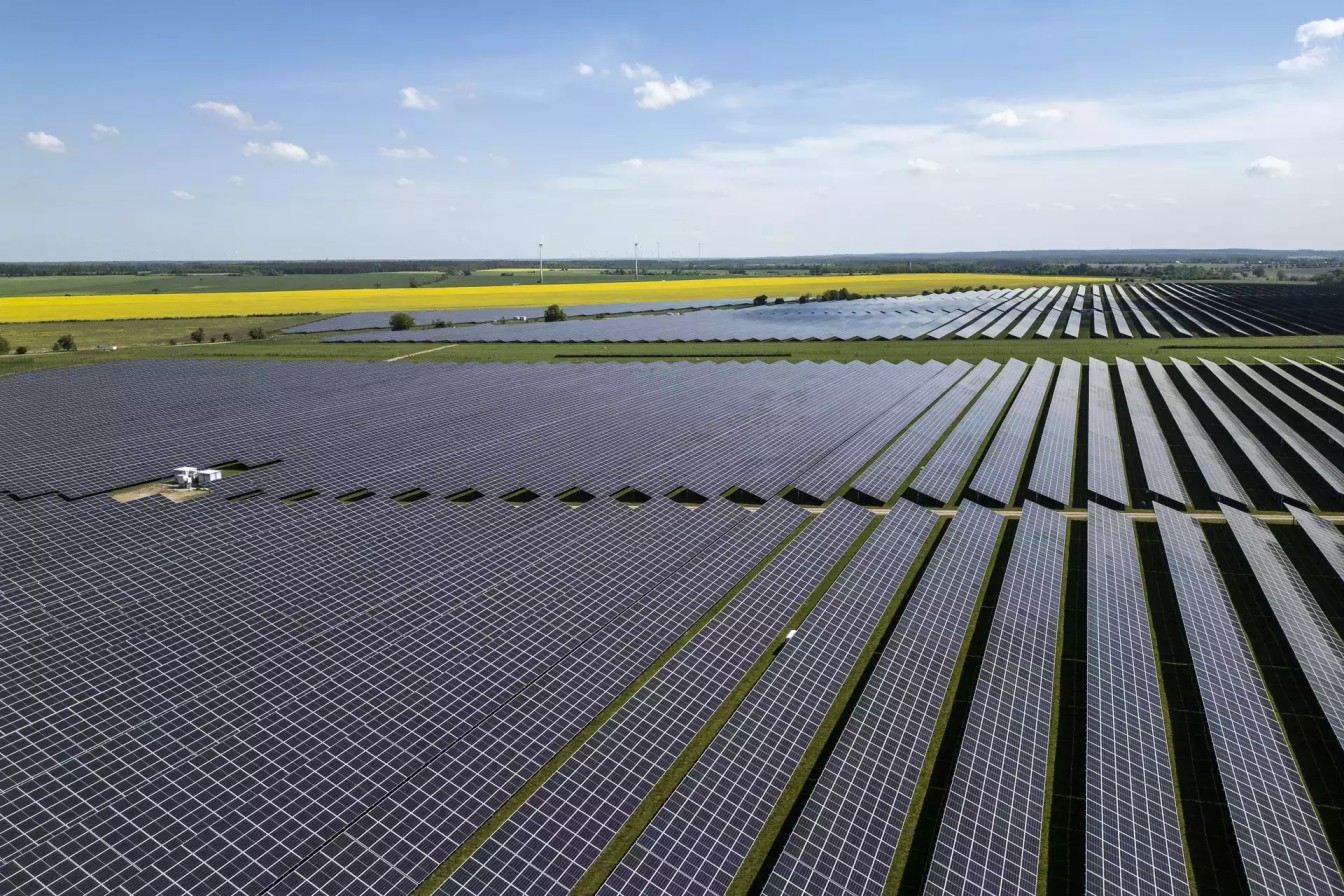
According to a research by the Institute for Energy Economics and Financial Analysis (IEEFA) and JMK Research, the utility-scale renewable energy sector in India has experienced a noteworthy surge, surpassing the government's ambitious objective of 50GW, with a record 69GW of bids in FY2024.
The increase in bids was driven by the large-scale potential for market growth, support from central government policies, and the prospect of higher operating margins. However, the report highlights substantial hurdles in converting these bids into operational energy projects, primarily due to a 40% import duty and requirements for local component procurement. These measures, intended to bolster domestic manufacturing, instead add costs and extend timelines for renewable projects as local production fails to compete with imported prices or meet the growing domestic demand.
The sector's development is further complicated by policy fluctuations, particularly in wind energy, where the suspension of reverse auctions due to unviable tariffs has led to market instability. Although the government is contemplating the reinstatement of these auctions, the uncertainty persists.
Moreover, despite a sharp decrease in module prices since August 2022, solar tariffs in India have not reflected this trend, hindered by basic custom duties and the approved list of models and manufacturers.
The report also forecasts the introduction of innovative projects, including India's first large-scale offshore wind tender of 4GW expected in early 2024 and a 500MW concentrated solar plus thermal storage tender anticipated in early 2025. The issuance of tenders for energy storage systems is set to play a vital role in shaping the country's renewable infrastructure.
Despite some developers' hesitance towards new technologies, the report notes that the successful implementation of large-scale projects by leading market players, some with international backing, is demonstrating the potential of these technologies.
According to the report, the future of utility-scale renewable energy tendering in India will depend on the ability to replicate successful tender types and introduce novel tender designs. This approach is essential for India to meet its renewable energy goal of 500GW by 2030.
Also Read : Substantial spike in coal production and dispatch in Feb'24 PM inaugurates, lays foundation stone for 8 Power Grid projects worth ₹56,000 cr

Bengal’s Steel Industry to Receive ₹8,000 Crore Investment West Bengal’s steel sector i...
Construction 20-Aug-2025
India has increased commercial LPG allocation to 70% of pre-crisis levels, up from 50%, to ease supp...
Oil & Gas 27-Mar-2026
Steel bridge construction has begun near Chakk Jidan village. Main highway lane is under demolition...
Construction 15-Apr-2025
Hyundai Steel has launched a major investment programme to secure a stable supply of high-quality fe...
Automobiles 09-Dec-2025
India's JSW Steel Limited recorded consolidated crude steel production of 6.35 million metric tonnes...
Large Corporate 11-Jul-2024
Carbon capture, utilisation, and storage (CCUS) is unlikely to play a significant part in decarbonis...
Raw Material 18-Apr-2024