


Gadchiroli pitched as Maharashtra’s future green steel hub India set to drive next global steel demand wave Italy crude steel output rises 3.1% in May Green steel progress remains slow worldwide
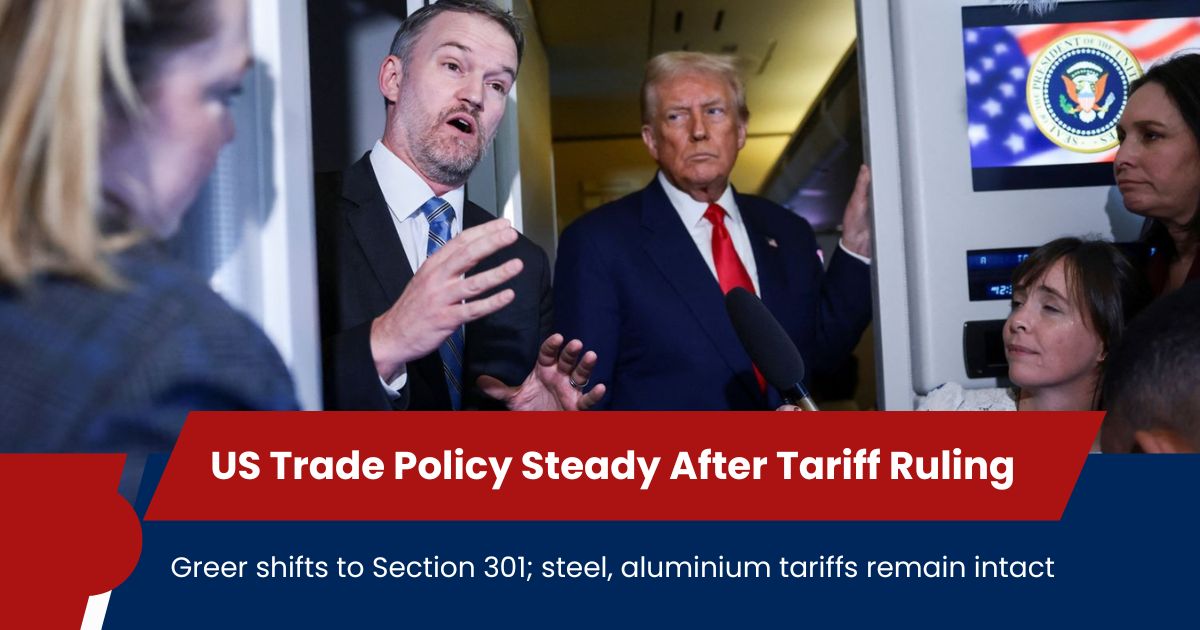
The US steel and metals trade is bracing for a legal pivot after the US Supreme Court curtailed the White House’s ability to levy broad tariffs under emergency economic powers. US Trade Representative Jamieson Greer said the administration’s trade agenda will continue, even if the “tools” change.
Greer indicated the USTR will lean more heavily on Section 301 investigations into alleged unfair trade practices—opening the door to targeted retaliatory duties where negotiations don’t deliver. He also stressed that existing national-security tariffs under Section 232, including measures covering steel and aluminium, remain in force.
To bridge the gap after the ruling, the administration has also moved to a temporary 10% global import tariff using Section 122 of the Trade Act of 1974, aimed at maintaining leverage while longer investigations run.For steel buyers and traders, the message is continuity with a different rulebook: compliance pathways, product classifications, and country exposure could matter as much as headline tariff rates, with fresh volatility possible around probe timelines and exemptions.
Also Read : Braya starts renewable diesel production in a come-by-chance refinery US–Japan Trade Deal Resets Tariffs, Keeps Steel Duties at 50%
SAIL’s net profit is up by 11% to ₹1,525 crore in Q4 FY25. Revenue is marginally higher at ₹2...
Business 29-May-2025
Researchers at the Indian Institute of Technology (IIT) Guwahati have developed a corrosion-resistan...
India 29-Nov-2025
French President Emmanuel Macron's visit as the chief guest for the Republic Day celebrations will l...
Business 24-Jan-2024
The Orissa High Court has upheld the decision of the Divisional Forest Officer (DFO), Keonjhar, to r...
Large Corporate 06-Dec-2025
Thermax reported an almost 88% increase in consolidated net profit to ₹237.06 crore for the December...
Mid Corporate 08-Feb-2024
India is developing a new production-linked incentive (PLI) plan for electronics components with the...
Business 19-Feb-2024