


Gadchiroli pitched as Maharashtra’s future green steel hub India set to drive next global steel demand wave Italy crude steel output rises 3.1% in May Green steel progress remains slow worldwide
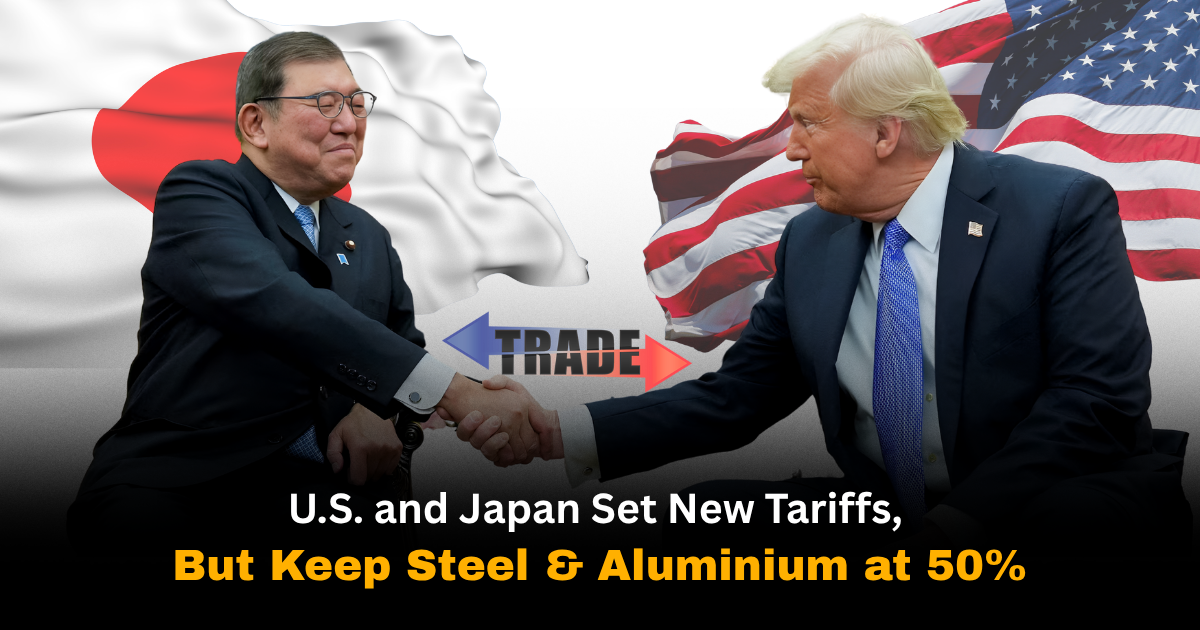
New U.S.–Japan Trade Deal Sets 15% Tariff Baseline
The United States and Japan have finalized a pivotal trade agreement that establishes a 15% baseline tariff on imports while retaining the 50% tariff on steel and aluminium. This deal is part of the broader U.S. shift toward a “reciprocal tariff” system, aligning duties with those imposed by trading partners.
Japan Gains Tariff Relief, Commits $550 Billion Investment
Set against a backdrop of rising protectionism, the agreement offers Japan tariff relief compared to earlier threats of 25% rates. In return, Japan will invest $550 billion into key U.S. sectors, including energy, semiconductors, agriculture, and auto parts manufacturing.
U.S. Automakers Worry About Competitive Disadvantage
While the deal aims to boost bilateral investment, U.S. automakers express concern over Japanese vehicles gaining an unfair price edge due to lower production costs and unchanged steel duties. Domestic manufacturers now face steeper input prices, especially as the 50% steel tariff increased in June 2025 continues to impact global supply chains.
Analysts See Deal as Model for Future Trade Talks
Trade analysts view this deal as a potential blueprint for future negotiations with the EU and China. It combines tariff predictability with strategic investments but also raises questions about fairness and long-term competitiveness in U.S. manufacturing.
Tariffs Evolve Into Tools of Economic Strategy
As the global trade landscape shifts, the U.S.–Japan pact underscores a key trend: tariffs are no longer just a tool of punishment, they're now instruments of policy design and economic leverage.
Also Read : Tit For Tat - India Set To Impose Tariffs On U.S. US grants $1.5 billion to GlobalFoundries for domestic semiconductor production
Nippon Steel will dissolve its joint venture with China's Baoshan Iron & Steel, cutting the Japa...
Business 23-Jul-2024
Man Industries (India) has signed a memorandum of understanding (MoU) with Aramco Asia India to expl...
Construction 20-Nov-2025
The global tool steel market is projected to witness significant growth between 2026 and 2036, drive...
Business 20-May-2026
Thyssenkrupp says a potential deal to sell Thyssenkrupp Steel Europe (TKSE) to Jindal Steel In...
Business 12-Feb-2026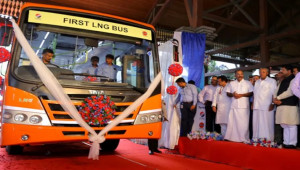
Chief Minister Eknath Shinde unveiled India's first Liquefied Natural Gas (LNG) powered bus, which w...
Energy 18-Mar-2024
POSCO is in talks to join Hyundai Steel’s $5.8 billion US steel plant venture. The move aims...
US 16-Apr-2025