


Tata Steel targets zero overseas debt by 2028 Thyssenkrupp Steel restarts Hot Strip Mill 4 at Duisburg Viraj Profiles accelerates stainless steel decarbonisation journey Electrical steel market set to reach USD 19.67 billion by 2032
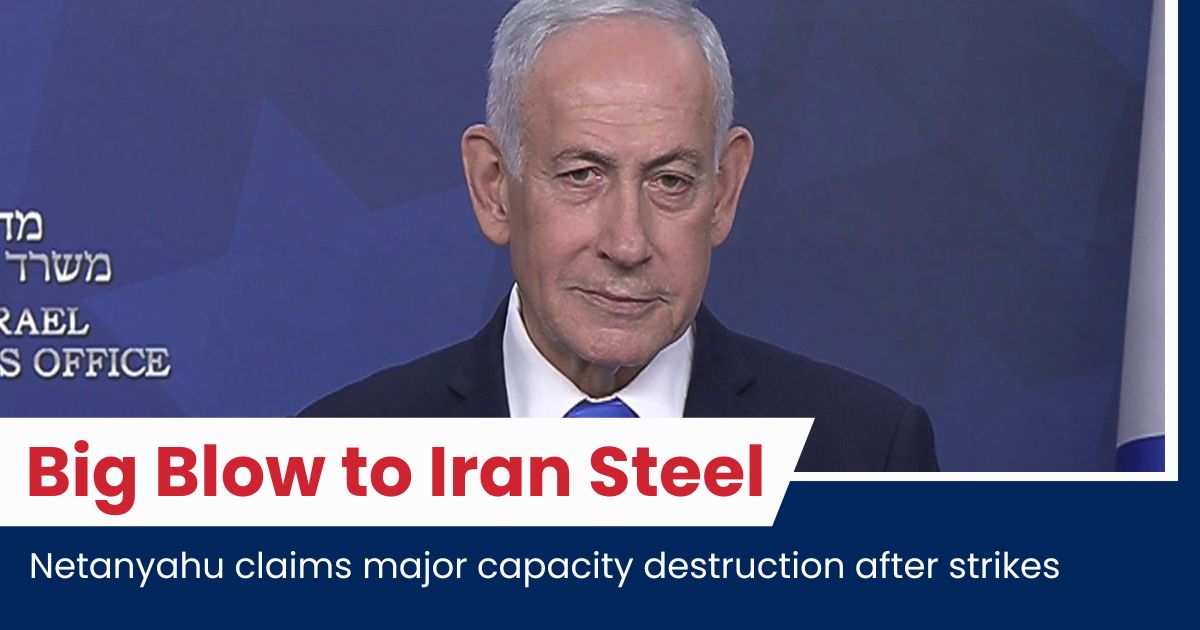
Israeli Prime Minister Benjamin Netanyahu has claimed that recent air strikes destroyed about 70% of Iran’s steel production capacity, calling it a major blow to Tehran’s industrial and military capabilities. He said the damage would limit Iran’s ability to produce weapons, as steel remains a critical material for missiles, drones, ships, and other strategic sectors.
The statement comes amid sharply rising tensions in the Middle East, with strikes and counter-strikes intensifying across the region. Reports indicate that Iran’s two biggest steel plants were forced out of action, adding to concerns over industrial disruption and broader supply chain pressure.
If confirmed, the scale of damage could have major implications for Iran’s manufacturing strength and regional trade flows. The development also places fresh attention on how geopolitical conflict can directly affect commodity markets, steel production, and industrial output. While the full extent of the damage remains difficult to independently verify, Netanyahu has presented the strikes as a significant strategic success.
Also Read : Arabian Pipes Company Secures New Steel Pipe Contract from Saudi Aramco Barclays Says Iran Strikes May Shift Steel Trade, Not Global Supply
Vedanta Chairman Anil Agarwal has called for a $25 billion investment push in mining, saying i...
Business 08-Apr-2026
Rise in Car Prices As Steel Costs Increase Indian automakers are preparing for another round of pri...
Construction 06-Aug-2025
✅ Record-breaking output: MOIL achieves its highest-ever manganese ore production in FY 2024-25.✅...
Business 04-Apr-2025
NTPC placed an order with state-owned engineering firm Bharat Heavy Electricals Ltd (BHEL) for the c...
Energy 19-Mar-2024
India's GDP for the October–December quarter of fiscal 2023–24 (Q3FY24) is scheduled to...
Business 29-Feb-2024
Fortescue has warned that the war-linked disruption around Iran is sharply increasing diesel c...
Asia 24-Mar-2026