


Gadchiroli pitched as Maharashtra’s future green steel hub India set to drive next global steel demand wave Italy crude steel output rises 3.1% in May Green steel progress remains slow worldwide
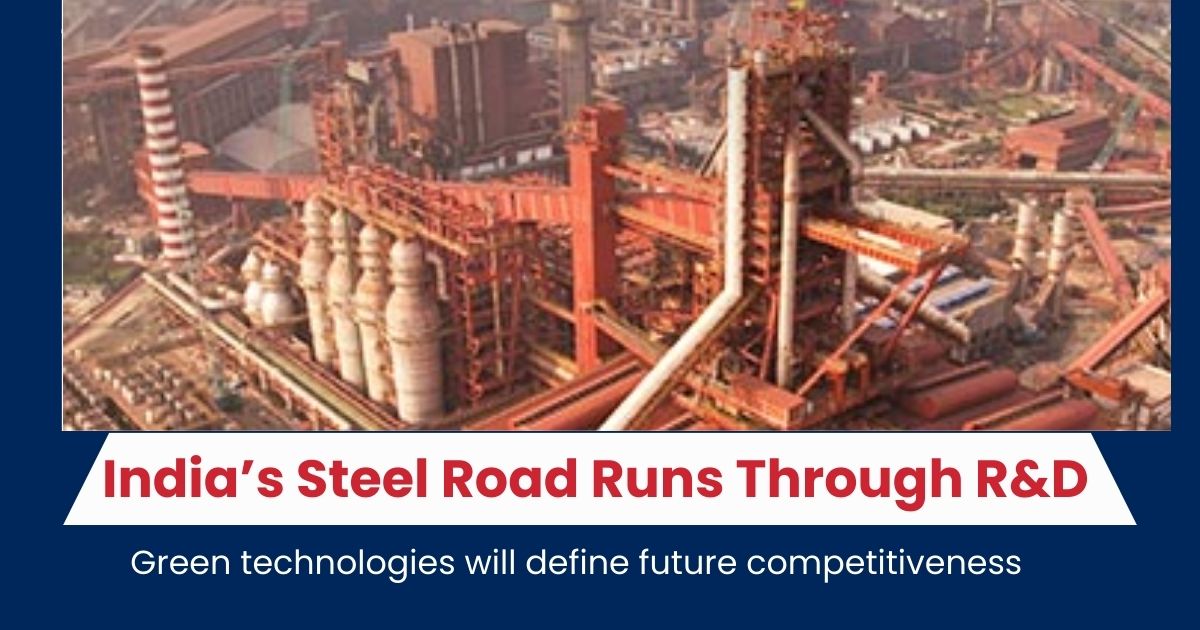
India’s ambition to build 300 MTPA crude steel capacity by 2030 will need more than scale. It will require a stronger green and research-led foundation to make growth sustainable, competitive, and future-ready. A new playbook highlights that while demand remains strong, the sector still faces major hurdles in scrap availability, hydrogen economics, decarbonisation costs, and low R&D intensity.
The article argues that India must strengthen scrap tracking, formalize recycling, develop hydrogen hubs, and support cleaner steelmaking through targeted policy and funding measures. It also underlines the need for deeper collaboration between industry, government, and academia to accelerate work on green steel, advanced alloys, and next-generation production technologies.
With crude steel production up 11.7% in April-October FY2025-26 and finished steel output rising 10.8%, the opportunity is clear. But to achieve its 2030 goal in a low-carbon world, India’s steel sector will need a stronger innovation engine, better infrastructure, and a coordinated roadmap for green transition.
Also Read : Global Steel Industry 2025: Top Producers, Market Trends, and the Drive Toward Sustainability JSW Steel Stock Reaches All-Time High Amid Strong Market Performance
China’s crude steel production fell to an eight-year low in April, highlighting fresh pr...
China 18-May-2026
Prime Minister Modi laid the groundwork for Tata-Powerchip Semiconductor Manufacturing Corp's chip p...
Ferrous 13-Mar-2024
Bengal’s Steel Industry to Receive ₹8,000 Crore Investment West Bengal’s steel sector i...
Construction 20-Aug-2025
✅ India plans measures to shield steel firms from US tariffs.✅ Export incentives and trade talks u...
US 18-Mar-2025
Chief Economic Adviser V Anantha Nageswaran on Thursday said measures like the Carbon Border Adjustm...
Business 15-Feb-2024
Tata Steel has witnessed a significant increase in trading volume, reflecting strong interest from i...
Business 18-Feb-2026