


Gadchiroli pitched as Maharashtra’s future green steel hub India set to drive next global steel demand wave Italy crude steel output rises 3.1% in May Green steel progress remains slow worldwide
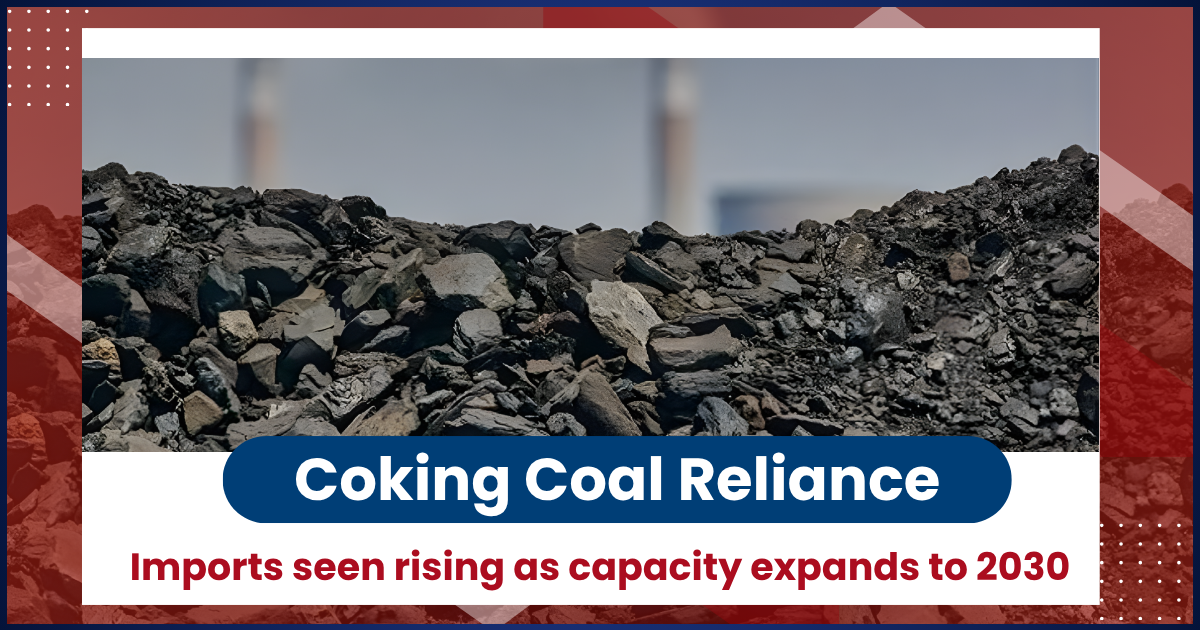
India’s steel industry is preparing for a rise in coking coal imports as capacity additions and infrastructure demand lift hot-metal output. With limited domestic availability, imports are expected to grow in the run-up to the 300 MT crude steel ambition for 2030.
Analysts estimate coking coal demand could reach ~135 MT by 2030, up from roughly 87 MT in FY25. Despite efforts to expand beneficiation and improve raw coal supplies, India still imports about 85% of its coking coal, keeping the focus on long-term contracts, source diversification and overseas asset tie-ups.
Port trends indicate steady reliance on seaborne supply: April–September FY26 inflows rose ~3% year on year, and September arrivals were marginally higher than August. Policymakers and state-run firms are engaging suppliers to mitigate price spikes and logistics risks through hedging, rail–port upgrades and improved blending strategies.
Producers say seaborne coking coal will remain central to BF–BOF ironmaking, even as mills raise scrap usage, expand PCI adoption, and pursue low-carbon routes (DRI/EAF and hydrogen-ready pilots) over the longer term. The near-term priority is securing reliable feedstock to support commissioning schedules and keep pace with sustained domestic steel demand.
Also Read : Tata Steel Shares Rise 3% After Q2 Results and ₹1,100-Crore Acquisition ArcelorMittal considers Gadchiroli for ₹40,000 cr investment in Maharashtra
Indian Oil Corporation (IOC) has revealed a substantial surge in its net profit for the third quarte...
Large Corporate 24-Jan-2024
Cleveland-Cliffs and South Korea’s POSCO have signed a strategic memorandum of understanding t...
US 31-Oct-2025
Beijing China's steel production fell by 1.5% year-on-year in the first two months of 2025, as...
China 17-Mar-2025
China’s Ministry of Commerce has chosen to keep the recent anti-dumping duties on imports of s...
China 13-May-2024
Iran’s steel production rose 3.7% YoY to 3.3 million MT in March. Growth sustained despite in...
Business 24-Apr-2025
Tata Steel Tubes Division crosses 1 million tonnes in FY25. Strong demand in infra, auto, and const...
Business 19-Apr-2025