


Gadchiroli pitched as Maharashtra’s future green steel hub India set to drive next global steel demand wave Italy crude steel output rises 3.1% in May Green steel progress remains slow worldwide
Demand for High Strength Steel is growing rapidly across multiple sectors.
Sustainability, innovation, and regulatory compliance are key growth drivers.
India is emerging as a serious contender in HSS production and export.
The global High Strength Steel (HSS) market is witnessing a paradigm shift, driven by growing demand from the automotive, construction, aerospace, and renewable energy sectors. As industries prioritize lightweight materials, fuel efficiency, and emission reduction, HSS emerges as a critical enabler.
HSS offers superior strength-to-weight ratios, making it ideal for reducing vehicle weight without compromising safety. Automotive manufacturers are increasingly adopting Advanced High Strength Steel (AHSS) and Ultra High Strength Steel (UHSS) to meet strict emission standards and improve crash performance.
In construction, HSS is facilitating green buildings and sustainable infrastructure, aligning with net-zero targets. The rise in wind and solar energy projects is also driving demand for corrosion-resistant and high-performance steel components.
Innovation is playing a crucial role. Manufacturers are investing in new alloy compositions, nano-structured steels, and AI-integrated production to optimize performance and reduce energy use.
India is positioning itself as a potential global supplier of HSS, with government support for advanced manufacturing, R&D incentives, and infrastructure modernization through schemes like PLI and PM Gati Shakti.
Also Read : India Imposes Temporary Tariff on Some Steel to Stem Cheap Imports from China India’s Steel Sector to Benefit from SAIL’s New Coking Coal Block
India’s steel sector may be entering a major turning point as record-low green hydrogen...
Business 30-Apr-2026
Tata Steel is back in focus after HSBC reaffirmed its Buy rating and set a target price of ₹21...
Business 20-Mar-2026
Shares of JSW Steel and Acutaas Chemicals are drawing investor interest after analysts highlig...
Business 10-Feb-2026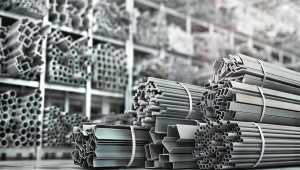
As speculation grows over a possible second Trump administration, India's steel industry is closely...
Business 04-Mar-2025
Anti-dumping duties on steel from Vietnam, Japan, South Korea. New tariffs to remain for 5 years....
Business 13-May-2025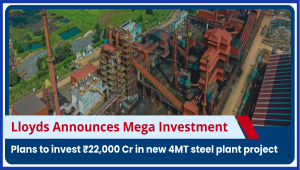
Lloyds Metals and Energy Ltd has announced plans to invest around ₹22,000 crore over the next 4&ndas...
Construction 25-Sep-2025