


Gadchiroli pitched as Maharashtra’s future green steel hub India set to drive next global steel demand wave Italy crude steel output rises 3.1% in May Green steel progress remains slow worldwide

The European Union’s Carbon Border Adjustment Mechanism (CBAM), implemented in October 2023, is set to impose carbon tariffs on imports of emission-intensive products, including steel. This aims to prevent carbon leakage and push global decarbonization.
A study by IIM-Lucknow, IMT-Ghaziabad, and Yale University highlights CBAM’s challenges for India’s steel industry. While large steelmakers may adapt by shifting to lower-carbon production, SMEs will struggle due to financial and technological constraints, creating an uneven playing field.
The report warns that CBAM could increase costs for Indian exporters and impact trade, especially amid ongoing India-EU Free Trade Agreement negotiations. Researchers urge policymakers to support SMEs in meeting carbon standards, ensuring a fair transition.
With the European Commission preparing new CBAM guidelines, India must engage in proactive discussions to protect its steel sector. A balanced approach is essential to prevent trade disruptions while aligning with global sustainability goals.
Also Read : India's biggest green hydrogen project is being built by JSW Energy UP to build 17 major cities as solar cities along with Ayodhya & Varanasi

PLDT Enterprise is expanding its strategic partnership with Zoom, the leading pioneer in cloud-based...
Small Enterprises 11-Jan-2024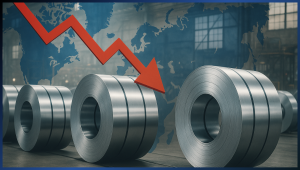
Global Steel Output Falls 3.8% in May as Demand Slows Global crude steel production declined by 3.8...
Business 24-Jun-2025
ArcelorMittal, one of the world’s largest steel producers, has announced plans to introduce it...
India 17-Sep-2025
NTPC, a state-run power company, and its subsidiary NTPC Green Energy signed two separate initial ag...
Mid Corporate 11-Mar-2024
Leading Indian steelmakers fell short of their investment targets for the fiscal year ending March 2...
Ferrous 15-Apr-2024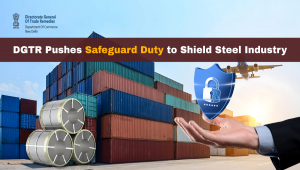
The Directorate General of Trade Remedies (DGTR), under the commerce and industry ministry, has reco...
Taxation 18-Aug-2025