


Gadchiroli pitched as Maharashtra’s future green steel hub India set to drive next global steel demand wave Italy crude steel output rises 3.1% in May Green steel progress remains slow worldwide
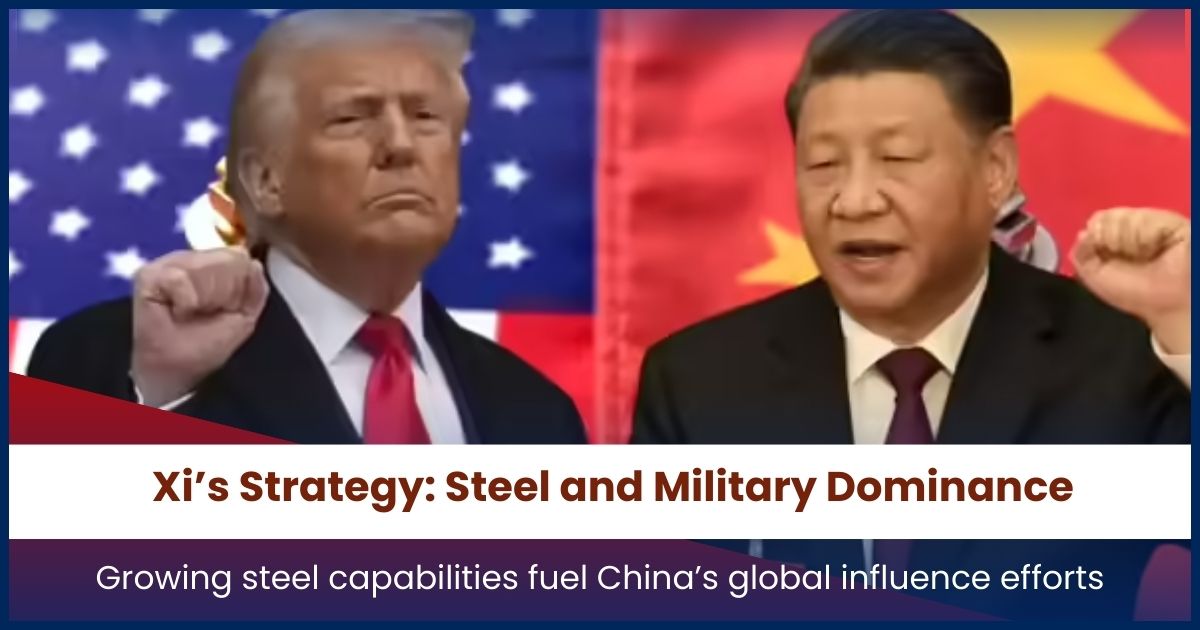
Xi Jinping’s growing emphasis on military strength is in direct response to the U.S. and Israel’s recent aggressive actions, including the targeted killing of Iran's supreme leader. These moves by President Donald Trump have deeply influenced Xi's strategic outlook, reaffirming his belief that military power is essential for safeguarding China’s global standing and sovereignty. Observing the U.S.'s assertive military approach in the Middle East, Xi has further solidified his vision of modernizing China's military, aligning with his long-term strategy of creating a "Great Wall of Steel." This doctrine is part of his broader goal to reduce China’s dependence on foreign technology and bolster its self-reliance in defense.
The growing tensions and military actions have also shown Xi that, in an increasingly volatile world, China must be prepared to take on a more proactive defense stance. The Chinese government is recalibrating its defense priorities to ensure that it is ready to face both external and internal threats. As China continues to expand its military capabilities, Xi’s leadership reflects a broader vision of global power and influence, positioning China as a counterbalance to U.S. dominance in the international arena.
With this shift in strategy, China's military ambitions are likely to grow, marking a more aggressive stance in the global power struggle, and potentially reshaping future international relations.
Also Read : China sets up third fund with $47.5 bn to grow semiconductor sector China coal industry doesn't expect imports to rise this year
China urges UK not to politicise steel trade amid British Steel tensions. Emphasis on fair competit...
China 14-Apr-2025
JSW Steel Emerges as Macquarie’s Top Pick Amid Indian Steel Sector Growth India&rsquo...
Large Corporate 23-Jun-2025
· Coking coal port traffic fell 9% in FY25 amid weak steel demand. · Stee...
Raw Material 07-Apr-2025
Oil prices rose in early trade on Tuesday, following a more than 1% decline the day before, as incre...
Asia 30-Jan-2024
According to rating agency ICRA, road execution in India is expected to grow by 5-8% to 12,500&ndash...
Construction 16-Apr-2024
Coal India Ltd's contribution to the government's exchequer fell by 2.2% to ₹9,560.28 crore in April...
Mid Corporate 06-Jun-2024