


Gadchiroli pitched as Maharashtra’s future green steel hub India set to drive next global steel demand wave Italy crude steel output rises 3.1% in May Green steel progress remains slow worldwide
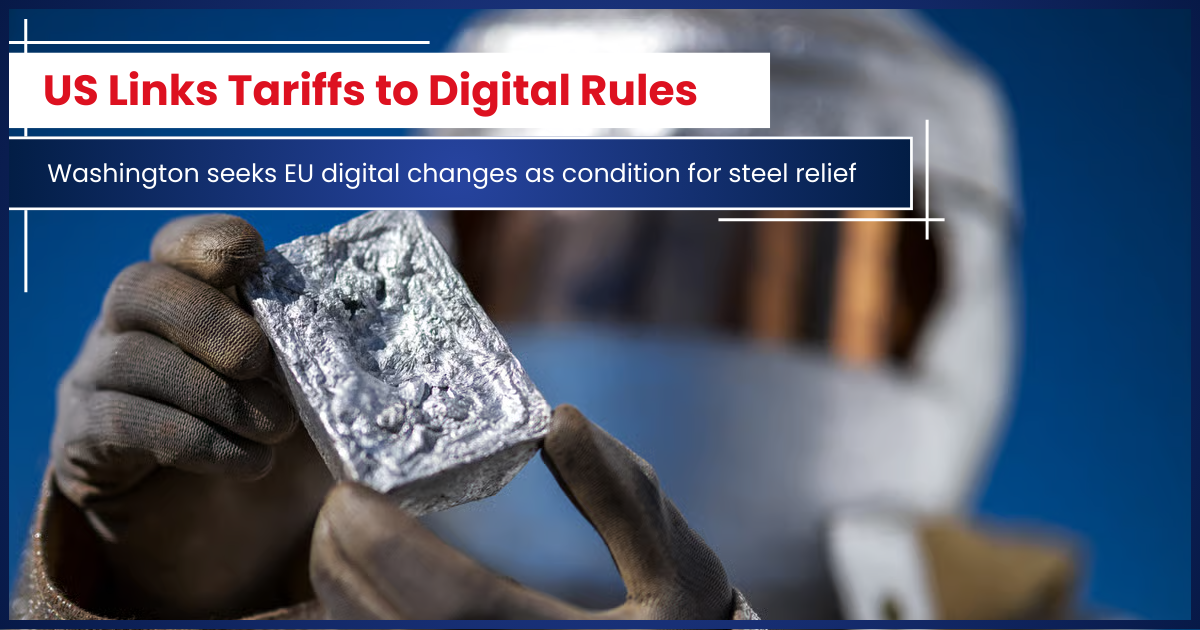
The United States has signalled that it will press the European Union to adopt more “balanced” digital-sector regulations as a precondition for easing steep tariffs on European steel and aluminium. The push was reinforced during talks in Brussels on November 24, where US trade officials linked tariff relief to a review of the EU’s digital rulebook.
The broader July trade understanding envisioned a harmonised 15% customs duty for many goods and the removal of duties on selected strategic items, while leaving other tariff lines — including a 50% US duty on specific European steel and aluminium products — subject to further negotiation. US representatives argued that softer, investment-friendly digital rules in the EU would attract substantial US technology capital and help unlock major investment flows, which some officials estimated could reach as high as $1 trillion.
Brussels, however, has defended its recent measures aimed at strengthening origin checks and raising duties to prevent circumvention, noting these actions are consistent with its trade-defence obligations. EU officials also emphasised the need to safeguard regulatory objectives in areas such as data protection, competition and platform oversight.
Trade analysts caution that coupling tariff normalization with digital-regulatory alignment broadens the negotiation agenda and could complicate progress. Tying sector-specific regulatory reform to tariff outcomes raises political and technical hurdles for both sides, suggesting that a comprehensive agreement will require intensive, cross-sectoral talks before any large-scale tariff rollbacks are feasible.
Also Read : Trump Says No Plans to Ease Steel, Aluminum Tariffs India's Proposed Tariffs Target $7.6 Billion in U.S. Imports
Oil plummeted after China, the world's largest crude importer reported weak economic data, but price...
China 31-Jan-2024
According to the state-owned power giant NTPC, it has logged a 55% growth in coal despatch and nearl...
Mid Corporate 01-Apr-2024
✅ BMW Industries expands steel manufacturing in Jharkhand to boost production.✅ Investment to supp...
Business 21-Mar-2025
A 20-year power purchase agreement for 500 MW was signed by Reliance Industries (RIL) and Adani Powe...
Large Corporate 29-Mar-2024
Tata Power Company Ltd aims to establish pumped hydro storage projects with a capacity of 2,800 MW b...
Large Corporate 19-Feb-2024
US aluminium producer Alcoa Corp on Monday made a non-binding, conditional buyout proposal for its A...
USA 26-Feb-2024