


Gadchiroli pitched as Maharashtra’s future green steel hub India set to drive next global steel demand wave Italy crude steel output rises 3.1% in May Green steel progress remains slow worldwide
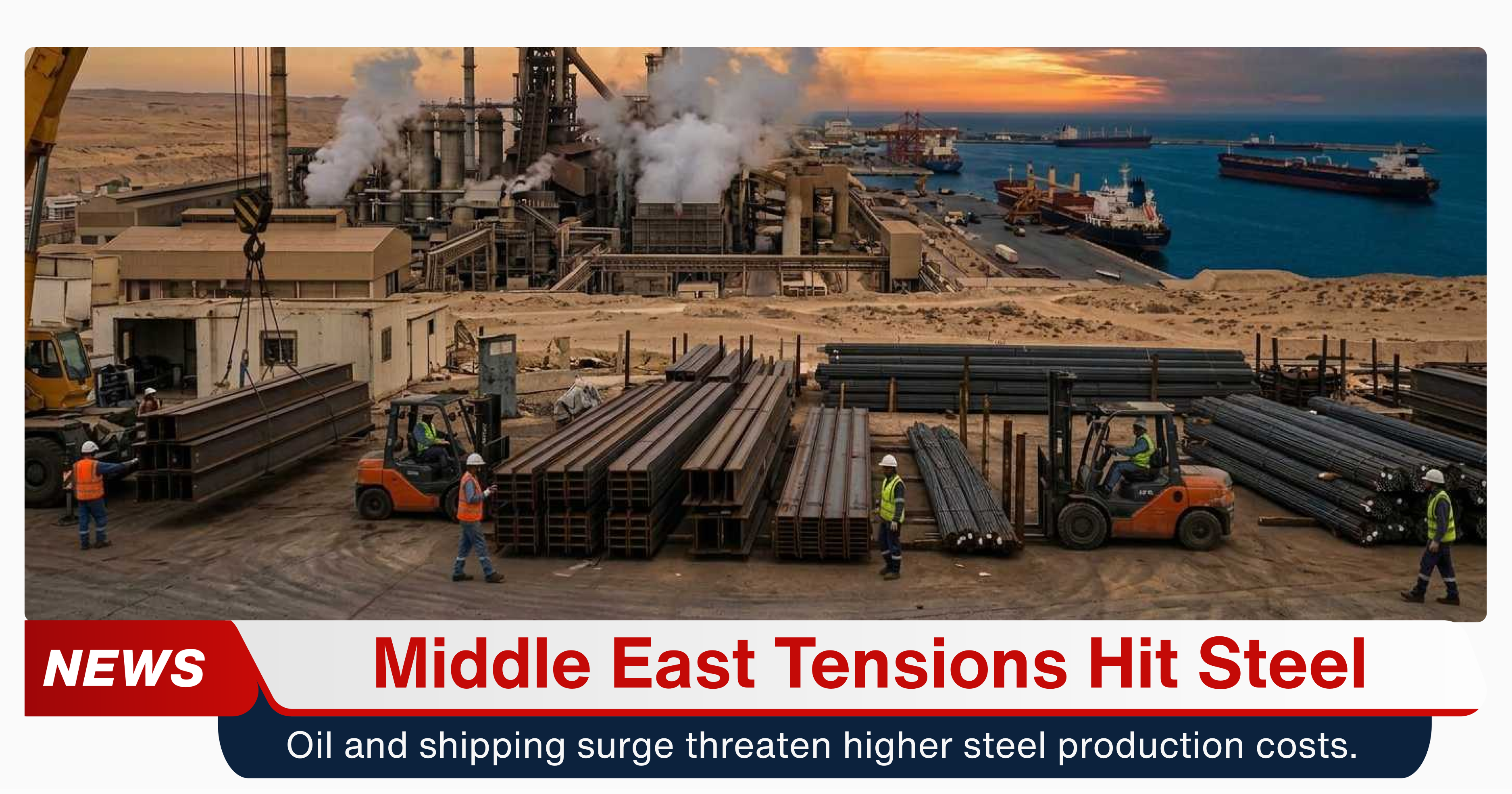
The escalating Middle East crisis is starting to weigh on the steel industry, with rising oil, LNG, and freight costs creating fresh pressure on producers across global markets, including India.
Crude oil prices have climbed sharply from around $70 per barrel before the conflict to nearly $90, while freight rates have jumped close to 40%. That combination is making steel production more expensive, especially as higher energy and shipping costs feed directly into the prices of key raw materials such as coking coal, scrap, and iron ore.
For steelmakers, the challenge is not just higher input costs but also tighter margins. If the disruption continues, companies may be forced to pass on part of the burden to buyers. But that comes with its own risk: if customers resist higher prices, steel demand could soften.
The situation is especially sensitive for India’s steel sector, where any sustained increase in logistics and fuel costs can quickly ripple through the supply chain. With uncertainty still high, the market is likely to stay volatile, and steel prices could remain under upward pressure in the near term.
Also Read : European Auto Supply Chain Faces Fresh Pressure from China and Sluggish Growth EU Slaps Anti-Dumping Duties on Hot-Rolled Steel from Egypt, Japan and Vietnam
Tata Steel expects steel prices in Europe to remain elevated in the coming quarters, driven by risin...
Europe 10-Feb-2026
India's production of critical minerals has increased significantly, with iron ore and limestone at...
Ferrous 01-Jul-2024
The International Conference on Steel took place in Ranchi, India on May 30-31, 2024. According to t...
Notification 31-May-2024
The Maharashtra Industrial Development Corporation (MIDC) has initiated plans to acquire 9,100 acres...
Business 25-Sep-2025
Crude oil prices have surged sharply, with Brent settling near $109.26 per barrel and WTI at $...
Oil & Gas 16-May-2026
Private steel major Tata Steel on Wednesday said it will jointly work with South Eastern Railway (SE...
Large Corporate 07-Feb-2024