


Gadchiroli pitched as Maharashtra’s future green steel hub India set to drive next global steel demand wave Italy crude steel output rises 3.1% in May Green steel progress remains slow worldwide

As per a report by CareEdge Ratings, India's reliance on LNG imports is expected to decline from 53% in FY21 to roughly 45% by FY26. The reason for this transition is that during the last three years, around 30 million standard cubic meters per day (MMSCMD) of new natural gas output have been added domestically. In FY25, an extra 15 MMSCMD are anticipated to go online.
"The government's push towards cleaner fuel has seen a steady rise in natural gas consumption until FY20. However, the COVID-19 pandemic and a sharp increase in imported LNG prices due to geopolitical tensions have led to a decline in consumption in FY21 and FY23," said Hardik Shah, Director, CareEdge Ratings.
Despite these challenges, FY24 is anticipated to mark the highest-ever annual gas consumption in India. The country aims to increase the share of natural gas in its primary energy mix from 6% to 15% by 2030, focusing on sectors like fertilizers, city gas distribution, power, refineries, and petrochemicals.
"Significant growth in domestic gas output from FY22, along with expected increases in FY24 and FY25, signals a shift towards reduced import dependency. This is further supported by regulatory steps to adjust domestic gas pricing, stabilise imported gas prices, and expand LNG capacity and gas pipeline infrastructure in India," Shah added.
India's previous high dependence on imported gas was due to limited domestic production. However, the report highlights an improvement in domestic gas production in the medium term, backed by recent discoveries and substantial new production anticipated in FY25.
After the setbacks of the COVID-19 pandemic and the Russia-Ukraine conflict, FY24's expected record gas consumption reflects India's robust demand across major segments, including fertiliser, city gas distribution, power, refineries, and petrochemicals. This trend is a crucial step towards meeting India's energy goals and reducing its reliance on imported LNG.
Also Read : Private refiners’ crude oil imports from Russia at 12-month high in April India's crude oil imports from Russia drop to 12-month low in Jan amid sanctions impact
The Department of Commerce and the Ministry of Steel continue to be in disagreement over how much lo...
Ferrous 04-Jun-2024
SJVN shares increased by 1% to ₹123.70 in early trade on February 28th, following its affiliate's co...
Mid Corporate 28-Feb-2024
Indian Railways has witnessed approx. 75% Capital expenditure utilisation (Highest ever) in the firs...
Press Releases 29-Jan-2024
Viraj Profiles has highlighted its ongoing decarbonisation journey, emphasizing a circular manufactu...
Business 05-Jun-2026
State-run Coal India Limited (CIL) has inked a memorandum of understanding (MoU) with Haryana Power...
Mid Corporate 15-Feb-2024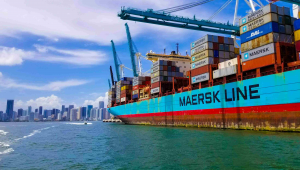
Maersk, a Danish shipping firm, has increased its focus on the Indian subcontinent and the Middle Ea...
Logistics 25-Jan-2024