


Gadchiroli pitched as Maharashtra’s future green steel hub India set to drive next global steel demand wave Italy crude steel output rises 3.1% in May Green steel progress remains slow worldwide
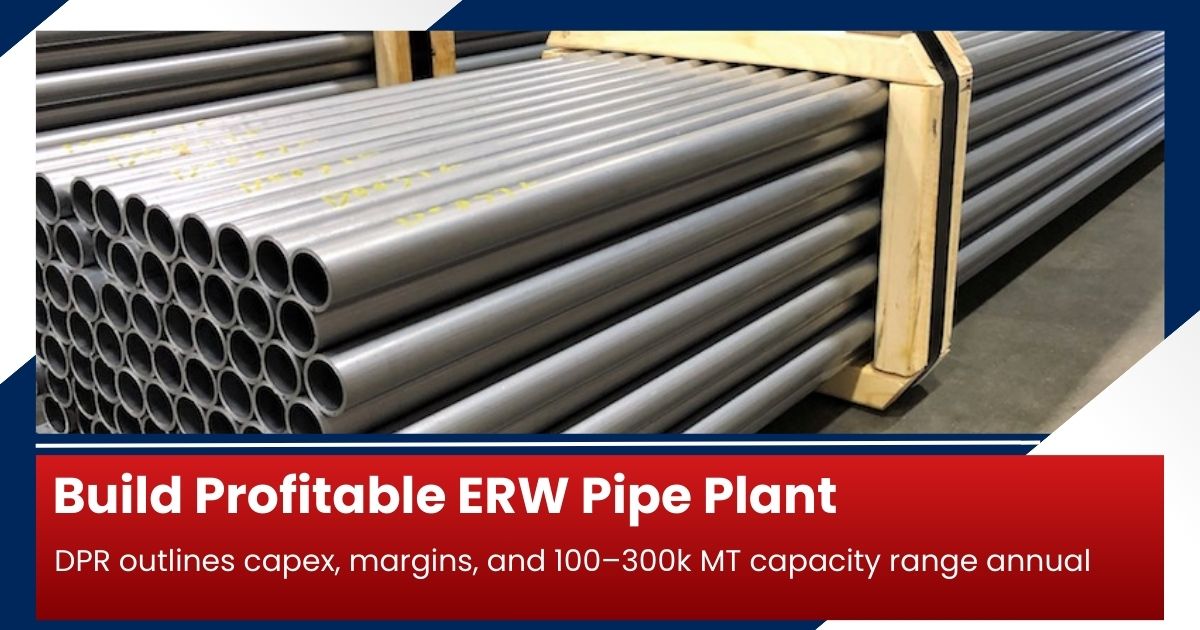
A fresh DPR-style project outline for ERW (Electric Resistance Welded) steel pipes highlights why the segment remains a workhorse for infrastructure and industry—and what it takes to set up a competitive manufacturing unit in 2026. The note positions ERW pipes as a high-volume, cost-effective product used across oil & gas, construction, automotive, water transportation, and energy infrastructure.
On scale, the proposed plant design targets 100,000–300,000 MT per year, offering flexibility to serve multiple end-use markets while improving unit economics. Profitability assumptions indicate gross margins of 15–25% and net margins of 5–10% under normal operating conditions, with upside linked to value-added pipes and tight cost control.
The operating cost breakdown is clear: raw materials dominate (75–85% of OpEx), making HRC steel coils sourcing and price risk management the biggest swing factor. Utilities typically account for 5–10%, while labour, maintenance, logistics, packaging, and compliance fill the rest. The DPR also emphasizes modern process essentials—precision forming, ERW welding, sizing mills, heat treatment, hydrostatic testing, and strong QA—along with safety and environmental compliance.
Also Read : Vardhman Special Steels Announces ₹2,000 Crore Greenfield Plant in Punjab India’s Steel Capacity Hits 200 MTPA: A Major Milestone
Power Mech Projects announced a significant achievement on Monday, revealing that it has successfull...
Mid Corporate 29-Jan-2024
US President Joe Biden launched a bundle of steep duties increases on an array of Chinese imports in...
US 14-May-2024
JFE Steel has invested ₹7,875 crore to acquire a 25% stake in JSW Kalinga Steel, marking the first p...
Asia 01-Apr-2026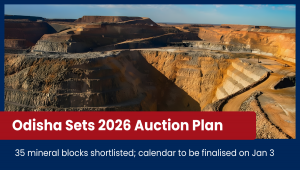
Odisha, India’s largest mineral-bearing state, has prepared a tentative list of 35 mineral blo...
Construction 31-Dec-2025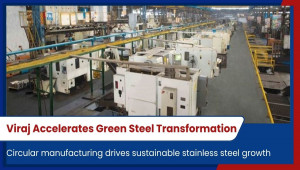
Viraj Profiles has highlighted its ongoing decarbonisation journey, emphasizing a circular manufactu...
Business 05-Jun-2026
The International Energy Agency (IEA) projects that India's oil production is likely to decrease, fr...
Large Corporate 16-Feb-2024